
landschaftsfotos.eu Linie landschaftsfotos.eu
Hello guest, you are not logged in. Log in | Create account 
Forum   Contact   Legal notice
German English 

Photos by Manfred Möldner
452 Photos
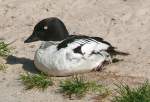
Common Goldeneye on 09.06.2008 in Wilhelma/Stuttgart - The Common Goldeneye (Bucephala clangula) is a bird species from the duck family (Anatidae). The 45 to 50 cm large Common Goldeneye weighs 500 to 1300 g and reaches a wingspan of up to 80 cm. What first catches the eye are the bright yellow eyes, which are also the reason for the English name  Goldeneye.  The Common Goldeneye can live up to 17 years and its call sounds roughly like  rr  or  grar.  The male has black and white plumage and a dark green head. Between the eye and the black bill, there is a white spot. The female has gray plumage and a dark brown head without a white spot. The legs are reddish colored. The American subspecies Bucephala clangula americana is somewhat larger than the European nominate form B. c. clangula. - Habitat: The Common Goldeneye lives in Eastern, Central, and Northern Europe, in Asia, and North America. It feels very comfortable in standing waters such as lakes and ponds. Originally, it was a characteristic species for nutrient-poor, oligotrophic waters. Today, in Central Europe, the Common Goldeneye also inhabits nutrient-rich, polytrophic waters. It can also be found in slow-flowing waters and along the coast. - Diet: The Common Goldeneye feeds on snails, crustaceans, plant parts, small fish, insects, and their larvae. It can dive up to eight meters deep to catch its meals. - Source = WIKIPEDIA
Common Goldeneye on 09.06.2008 in Wilhelma/Stuttgart - The Common Goldeneye (Bucephala clangula) is a bird species from the duck family (Anatidae). The 45 to 50 cm large Common Goldeneye weighs 500 to 1300 g and reaches a wingspan of up to 80 cm. What first catches the eye are the bright yellow eyes, which are also the reason for the English name "Goldeneye." The Common Goldeneye can live up to 17 years and its call sounds roughly like "rr" or "grar." The male has black and white plumage and a dark green head. Between the eye and the black bill, there is a white spot. The female has gray plumage and a dark brown head without a white spot. The legs are reddish colored. The American subspecies Bucephala clangula americana is somewhat larger than the European nominate form B. c. clangula. - Habitat: The Common Goldeneye lives in Eastern, Central, and Northern Europe, in Asia, and North America. It feels very comfortable in standing waters such as lakes and ponds. Originally, it was a characteristic species for nutrient-poor, oligotrophic waters. Today, in Central Europe, the Common Goldeneye also inhabits nutrient-rich, polytrophic waters. It can also be found in slow-flowing waters and along the coast. - Diet: The Common Goldeneye feeds on snails, crustaceans, plant parts, small fish, insects, and their larvae. It can dive up to eight meters deep to catch its meals. - Source = WIKIPEDIA
Manfred Möldner

Galerien / Tierfotos / V�, Wasserv�

521 800x549 Px, 22.06.2008

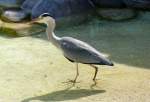
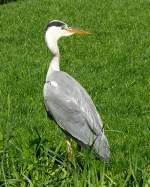
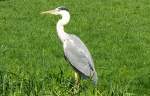
Grey heron on 09.06.2008 in Wilhelma/Stuttgart
Manfred Möldner

Galerien / Tierfotos / V�, Wasserv�

479 800x547 Px, 22.06.2008

Grey Heron on 09.06.2008 in Wilhelma/Stuttgart - The Grey Heron (Ardea cinerea), also called the Fish Heron, is a bird species from the order of wading birds (Ciconiiformes) - Distribution: It is found in the milder regions of Europe and Asia, as well as throughout southern Africa except for the southern coasts. In predominantly ice-free regions, it is a resident bird, while in other areas it migrates further south in winter. In Germany, it is mostly a resident bird. In severe winters, when many open water surfaces freeze over, population losses are very high. The Grey Heron particularly prefers shallow, overgrown small ponds and pools that are preferably bushy and wooded around. Recently, it has increasingly moved into urban areas, where it can now often be observed even in city centers. It also forms mixed groups with Little Egrets (for example in the Po Valley in northern Italy) - Appearance: The Grey Heron is somewhat smaller than a stork (about 90 cm). The plumage on the forehead and crown is white, the neck is grey-white, and the back is ash grey with white bands. It has black eye stripes as well as three long black crest feathers forming a plume, a triple row of black spots on the front of the neck, and black wings. It flies with slow wing beats and head pulled back to the shoulders, with an s-shaped curved neck. During flight, a loud, rough  chräik  call is regularly heard. The Grey Heron reaches a wingspan of about 1.70 m. - Source = WIKIPEDIA
Grey Heron on 09.06.2008 in Wilhelma/Stuttgart - The Grey Heron (Ardea cinerea), also called the Fish Heron, is a bird species from the order of wading birds (Ciconiiformes) - Distribution: It is found in the milder regions of Europe and Asia, as well as throughout southern Africa except for the southern coasts. In predominantly ice-free regions, it is a resident bird, while in other areas it migrates further south in winter. In Germany, it is mostly a resident bird. In severe winters, when many open water surfaces freeze over, population losses are very high. The Grey Heron particularly prefers shallow, overgrown small ponds and pools that are preferably bushy and wooded around. Recently, it has increasingly moved into urban areas, where it can now often be observed even in city centers. It also forms mixed groups with Little Egrets (for example in the Po Valley in northern Italy) - Appearance: The Grey Heron is somewhat smaller than a stork (about 90 cm). The plumage on the forehead and crown is white, the neck is grey-white, and the back is ash grey with white bands. It has black eye stripes as well as three long black crest feathers forming a plume, a triple row of black spots on the front of the neck, and black wings. It flies with slow wing beats and head pulled back to the shoulders, with an s-shaped curved neck. During flight, a loud, rough "chräik" call is regularly heard. The Grey Heron reaches a wingspan of about 1.70 m. - Source = WIKIPEDIA
Manfred Möldner

Galerien / Tierfotos / V�, Wasserv�

550 640x800 Px, 22.06.2008

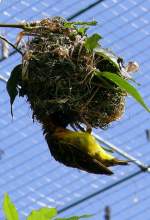
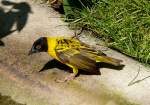
Weaver bird building a nest on 21.06.2008 in Wilhelma/Stuttgart.
Manfred Möldner

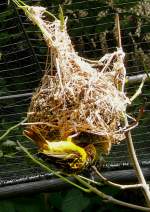
Weaver bird building a nest on 21.06.2008 in Wilhelma/Stuttgart.
Manfred Möldner

Village weaver on 09.06.2008 in Wilhelma/Stuttgart. The village weaver, also known as the village weaverbird (Ploceus cucullatus), is a species from the weaverbird family. It was previously classified in the genus Textor and was then called Textor cucullatus. - The village weaver reaches a body length of 15 to 18 centimeters. During the breeding season, the males display bright yellow plumage. The head and wings, however, are covered with black feathers. Outside the breeding season, the males' plumage resembles that of the females. It is then greenish in color with fine streaking. - Behavior: Village weavers are lively and noisy colonial breeders that build their kidney-shaped hanging nests from grass close together. During nest building, males can often be observed hanging upside down on branches with fluttering wings. Incubation of the eggs and raising of the young birds is mainly done by the females. - Distribution and habitat: Village weavers are found from Sudan and southern Ethiopia to Angola and the Cape Province of South Africa. Within this range, they inhabit the edges of forests as well as agricultural areas and village environments. - Source = WIKIPEDIA
Manfred Möldner

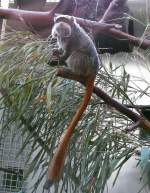
Emperor Tamarin on 21.06.2008 in Wilhelma/Stuttgart - Distribution: Emperor tamarins live in the southwestern Amazon Basin, in eastern Peru, northern Bolivia, and in the western Brazilian states of Acre and Amazonas. - Description: The fur of the emperor tamarins is predominantly gray, with yellowish speckles on the chest. The hands and feet are black, the tail brown. However, the most striking feature is the long, white mustache that extends over the shoulders on both sides. The animals reach a head-body length of 23 to 26 centimeters, with an additional tail length of 35 to 14 centimeters. Their weight is around 300 to 400 grams. - Lifestyle: These primates inhabit tropical rainforests, but they are found not only deep in the forest but also in open, tree-covered areas. They are diurnal animals that spend most of their lives moving quickly and securely with long leaps through the trees. Emperor tamarins live in groups of two to eight animals. The oldest female leads the group, which may also include several sexually mature males. Mutual grooming plays an important role in maintaining contacts within the group. The animals often associate with other tamarin species, such as the brown-backed tamarin. They communicate with each other through calls, which help them detect predators early. Diet: Emperor tamarins, like all tamarins, are omnivores that feed on fruits, insects, and tree sap. Additionally, they also consume bird eggs and small vertebrates (for example, lizards and tree frogs). Due to their low weight, they can reach prey at the outer ends of branches that are inaccessible to heavier primates. Source = WIKIPEDIA
Manfred Möldner

Orchid Houlletia wallisii on 21.06.2008 in Wilhelma/Stuttgart

Origin: Colombia, Ecuador, and Peru
Light: Partial shade - Shade
Temperature range: Temperate
Size: Medium - Large
Description: Houlletia wallisii is a medium-sized orchid that bears a long-stemmed leaf on a bulb about the size of a chicken egg. The flower spike develops at the base of the bulb and carries many yellow-black spotted fragrant flowers. The flower color varies greatly.
Cultivation: Houlletia wallisii is not easy to cultivate. As a forest orchid, it requires high humidity and substrate moisture under temperate conditions. Standing water, especially overnight, on new and flower shoots leads to their loss. Good ventilation and plenty of fresh air, as well as proper nutrient supply, are important. No dormancy period. Source = Orchideen Lenhard
Orchid Houlletia wallisii on 21.06.2008 in Wilhelma/Stuttgart Origin: Colombia, Ecuador, and Peru Light: Partial shade - Shade Temperature range: Temperate Size: Medium - Large Description: Houlletia wallisii is a medium-sized orchid that bears a long-stemmed leaf on a bulb about the size of a chicken egg. The flower spike develops at the base of the bulb and carries many yellow-black spotted fragrant flowers. The flower color varies greatly. Cultivation: Houlletia wallisii is not easy to cultivate. As a forest orchid, it requires high humidity and substrate moisture under temperate conditions. Standing water, especially overnight, on new and flower shoots leads to their loss. Good ventilation and plenty of fresh air, as well as proper nutrient supply, are important. No dormancy period. Source = Orchideen Lenhard
Manfred Möldner

Orchid Phalaenopsis from Malaysia on 21.06.2008 in Wilhelma/Stuttgart. The genus Phalaenopsis belongs to the family of orchids (Orchidaceae) and is today one of the best-known and most popular genera of tropical orchids. The botanical name is derived from the Greek Phalaina (moth) and -opsis (appearance), as the flowers resemble tropical moths. Source = Wikipedia
Manfred Möldner

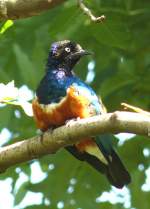
Tricolored Starling on 09.06.2008 in Wilhelma/Stuttgart
Manfred Möldner

Tricolored starling on 09.06.2008 in Wilhelma/Stuttgart
Manfred Möldner

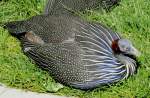
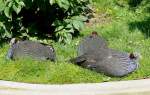
Vulturine guineafowl on 09.06.2008 in Wilhelma/Stuttgart
Manfred Möldner

Vulturine guineafowl on 09.06.2008 in Wilhelma/Stuttgart
Manfred Möldner

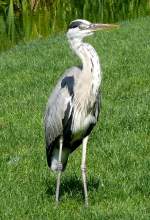
Grey heron on 09.06.2008 in Wilhelma/Stuttgart
Manfred Möldner

Grey heron on 09.06.2008 in Wilhelma/Stuttgart
Manfred Möldner

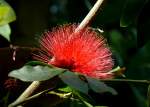
Mahogany tree blossom on 01.06.2008 in Wilhelma/Stuttgart
Manfred Möldner

Galerien / Pflanzen und Pilze / Bl�- und Kleinpflanzen

679  2 800x573 Px, 20.06.2008

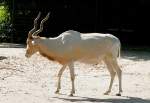
Mendes antelope on 01.06.2008 in Wilhelma/Stuttgart
Manfred Möldner

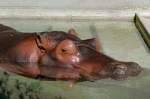
Hippopotamus on 01.06.2008 in Wilhelma/Stuttgart
Manfred Möldner

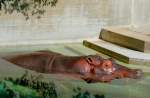
Hippopotamus on 01.06.2008 in Wilhelma/Stuttgart
Manfred Möldner

Polar bear Wilbär with mother on 01.06.2008 at Wilhelma/Stuttgart. Unfortunately, about 5 meters in front of the glass front of the polar bear enclosure there is a barrier, so that as many visitors as possible can get a view of the polar bear cub (reflection is very disturbing when photographing).
Manfred Möldner

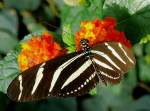
Passionflower butterfly on 01.06.2008 in the butterfly house Wilhelma/Stuttgart
Manfred Möldner

Galerien / Tierfotos / Insekten und Spinnen

490 800x596 Px, 15.06.2008

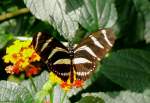
Passionflower butterfly on 01.06.2008 in the Wilhelma Butterfly House/Stuttgart
Manfred Möldner

Galerien / Tierfotos / Insekten und Spinnen

451 800x551 Px, 15.06.2008

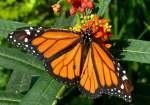
Monarch on 01.06.2008 in the Butterfly House Wilhelma/Stuttgart
Manfred Möldner

Galerien / Tierfotos / Insekten und Spinnen

540 800x561 Px, 15.06.2008

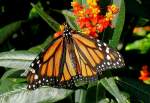
Monarch on 01.06.2008 in the Butterfly House Wilhelma/Stuttgart
Manfred Möldner

Galerien / Tierfotos / Insekten und Spinnen

505 799x552 Px, 15.06.2008