
landschaftsfotos.eu Linie landschaftsfotos.eu
Hello guest, you are not logged in. Log in | Create account 
Forum   Contact   Legal notice
German English 

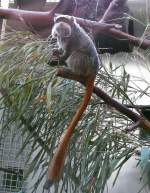
Emperor Tamarin on 21.06.2008 in Wilhelma/Stuttgart - Distribution: Emperor tamarins live in the southwestern Amazon Basin, in eastern Peru, northern Bolivia, and in the western Brazilian states of

(ID 7089)
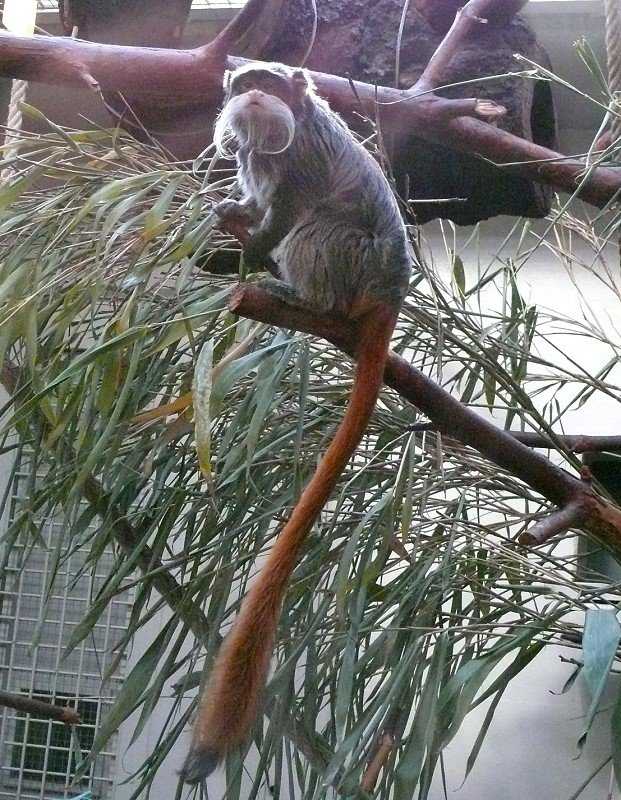

Emperor Tamarin on 21.06.2008 in Wilhelma/Stuttgart - Distribution: Emperor tamarins live in the southwestern Amazon Basin, in eastern Peru, northern Bolivia, and in the western Brazilian states of Acre and Amazonas. - Description: The fur of the emperor tamarins is predominantly gray, with yellowish speckles on the chest. The hands and feet are black, the tail brown. However, the most striking feature is the long, white mustache that extends over the shoulders on both sides. The animals reach a head-body length of 23 to 26 centimeters, with an additional tail length of 35 to 14 centimeters. Their weight is around 300 to 400 grams. - Lifestyle: These primates inhabit tropical rainforests, but they are found not only deep in the forest but also in open, tree-covered areas. They are diurnal animals that spend most of their lives moving quickly and securely with long leaps through the trees. Emperor tamarins live in groups of two to eight animals. The oldest female leads the group, which may also include several sexually mature males. Mutual grooming plays an important role in maintaining contacts within the group. The animals often associate with other tamarin species, such as the brown-backed tamarin. They communicate with each other through calls, which help them detect predators early. Diet: Emperor tamarins, like all tamarins, are omnivores that feed on fruits, insects, and tree sap. Additionally, they also consume bird eggs and small vertebrates (for example, lizards and tree frogs). Due to their low weight, they can reach prey at the outer ends of branches that are inaccessible to heavier primates. Source = WIKIPEDIA

Emperor Tamarin on 21.06.2008 in Wilhelma/Stuttgart - Distribution: Emperor tamarins live in the southwestern Amazon Basin, in eastern Peru, northern Bolivia, and in the western Brazilian states of Acre and Amazonas. - Description: The fur of the emperor tamarins is predominantly gray, with yellowish speckles on the chest. The hands and feet are black, the tail brown. However, the most striking feature is the long, white mustache that extends over the shoulders on both sides. The animals reach a head-body length of 23 to 26 centimeters, with an additional tail length of 35 to 14 centimeters. Their weight is around 300 to 400 grams. - Lifestyle: These primates inhabit tropical rainforests, but they are found not only deep in the forest but also in open, tree-covered areas. They are diurnal animals that spend most of their lives moving quickly and securely with long leaps through the trees. Emperor tamarins live in groups of two to eight animals. The oldest female leads the group, which may also include several sexually mature males. Mutual grooming plays an important role in maintaining contacts within the group. The animals often associate with other tamarin species, such as the brown-backed tamarin. They communicate with each other through calls, which help them detect predators early. Diet: Emperor tamarins, like all tamarins, are omnivores that feed on fruits, insects, and tree sap. Additionally, they also consume bird eggs and small vertebrates (for example, lizards and tree frogs). Due to their low weight, they can reach prey at the outer ends of branches that are inaccessible to heavier primates. Source = WIKIPEDIA

Manfred Möldner http://www.railpix-ch.de/ 21.06.2008, 992 Views, 0 Comments * automatically translated


0 Comments, All comments
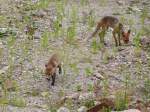
As gaunt as these two foxes look, there seems to be little nutritious food in the terrain of exposed old foundations right in the city center near the castle, Georgentor, etc.; Dresden, 19.06.2009
Volkmar Döring

Galerien / Tierfotos / S䵧etiere

693 800x600 Px, 29.09.2009

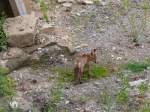
 If only I could at least satisfy my hunger with a mouse, the tourists just gawk and don't throw anything over ; Dresden, 19.06.2009
"If only I could at least satisfy my hunger with a mouse, the tourists just gawk and don't throw anything over"; Dresden, 19.06.2009
Volkmar Döring

Galerien / Tierfotos / S䵧etiere

660 800x600 Px, 29.09.2009

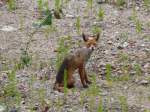
 Give me something to eat rather than photographing me,  this fox might be thinking. It lives with another of its kind in an area of exposed old foundations right in the city center, not far from the castle, Georgentor, etc. Not only I, but many others also snapped pictures of this  tourist attraction ; Dresden, 19.06.2009
"Give me something to eat rather than photographing me," this fox might be thinking. It lives with another of its kind in an area of exposed old foundations right in the city center, not far from the castle, Georgentor, etc. Not only I, but many others also snapped pictures of this "tourist attraction"; Dresden, 19.06.2009
Volkmar Döring

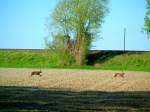
I was able to spot this deer on 26.06.09 just behind the Burgkemnitz train station. It was just as surprised as I was!
Martin Schneider

Galerien / Tierfotos / S䵧etiere

650  2 800x531 Px, 13.07.2009