
landschaftsfotos.eu Linie landschaftsfotos.eu
Hello guest, you are not logged in. Log in | Create account 
Forum   Contact   Legal notice
German English 

Photos by Manfred Möldner
452 Photos
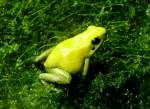
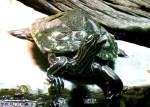
Dwarf Humpback Tortoise on 14.06.2008 in Wilhelma/Stuttgart
Manfred Möldner

Galerien / Tierfotos / Reptilien

521 799x571 Px, 30.06.2008

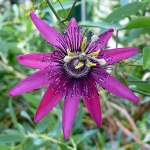
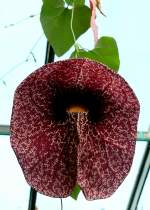
Bougainvillea (climbing plant) on 14.06.2008 in Wilhelma/Stuttgart
Manfred Möldner

Bloom of the bougainvillea (climbing plant) on 14.06.2008 in Wilhelma/Stuttgart
Manfred Möldner

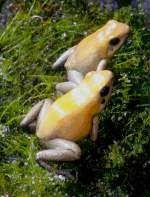
Poison dart frog (about 3cm) on 29.06.2008 in Wilhelma/Stuttgart (poor lighting: ISO400 F3.6 1/15sec)
Manfred Möldner

Galerien / Tierfotos / Amphibien

542 799x584 Px, 30.06.2008

Poison dart frogs (about 3cm) on 29.06.2008 in Wilhelma/Stuttgart (poor lighting: ISO400 F3.2 1/10sec) - The genus of poison dart frogs (Trachycephalus; synonym for some species: Phrynohyas), also called toad poison dart frogs or casque-headed poison dart frogs, belongs within the order of frogs and toads (Anura) to the family of tree frogs in the broad sense (Hylidae). These are relatively large tree frogs (sometimes over 10 cm snout-vent length) with notably thick skin, which is permeated by many mucus and poison glands and can therefore appear comparatively  warty.  The males have paired vocal sacs located behind the jaw angles. Poison dart frogs lay their eggs in water-filled tree holes (phytotelmata) or large leaves. Their distribution extends from Mexico through Central America to central South America, in the lowlands east of the Andes up to northern Argentina and eastern Brazil.
Poison dart frogs (about 3cm) on 29.06.2008 in Wilhelma/Stuttgart (poor lighting: ISO400 F3.2 1/10sec) - The genus of poison dart frogs (Trachycephalus; synonym for some species: Phrynohyas), also called toad poison dart frogs or casque-headed poison dart frogs, belongs within the order of frogs and toads (Anura) to the family of tree frogs in the broad sense (Hylidae). These are relatively large tree frogs (sometimes over 10 cm snout-vent length) with notably thick skin, which is permeated by many mucus and poison glands and can therefore appear comparatively "warty." The males have paired vocal sacs located behind the jaw angles. Poison dart frogs lay their eggs in water-filled tree holes (phytotelmata) or large leaves. Their distribution extends from Mexico through Central America to central South America, in the lowlands east of the Andes up to northern Argentina and eastern Brazil.
Manfred Möldner

Galerien / Tierfotos / Amphibien

496 607x800 Px, 30.06.2008

Hypeastrum Amaryllis on 14.06.2008 in Wilhelma/Stuttgart
Manfred Möldner

Speckled eucalyptus blossom on 14.06.2008 in Wilhelma/Stuttgart
Manfred Möldner

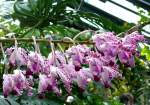
Orchid on 14.06.2008 in Wilhelma/Stuttgart
Manfred Möldner

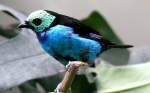
Turquoise Tanagers on 14.06.2008 in Wilhelma/Stuttgart - The tanagers (Thraupidae) are a species-rich and morphologically diverse family in the order of passerine birds (Passeriformes). Previously, they were classified as the subfamily Thraupinae within the buntings (Emberizidae). Tanagers are found exclusively in the Americas and on islands in the western Indian Ocean, primarily inhabiting the tree canopies in forests. Most species live in tropical regions of South America and are resident birds. Their plumage is colorful and strikingly patterned, and they have well-developed legs that facilitate life in the trees. Their song is not very impressive and weakly developed. Source = WIKIPEDIA
Manfred Möldner

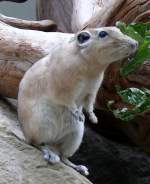
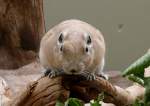
Gundi on 14.06.2008 in Wilhelma/Stuttgart - Gundi is a type of comb-fingered rodent. These rodents live only in the rocky mountains and dry steppes of northern Africa. They are about the size of a guinea pig (up to 20 centimeters long, tail about five centimeters) and appear rather stocky. Their fur is usually soft, their whiskers are particularly long, and their tail is also covered with long bristles. The comb-fingered rodents feed on grasses, herbs, and grains. They usually live in family groups but do not show territorial behavior. After sunrise, they come out of their rock crevices to feed, then they take a sunbath. They become active again only towards evening and retreat to the rock caves at sunset. Similar to marmots, they warn each other with whistles. They can enter a kind of apparent death-like immobility to avoid being detected by predators. Source = www.tier-lexikon.de
Manfred Möldner

Gundi on 14.06.2008 in Wilhelma/Stuttgart - Gundi is a type of comb-fingered rodent. These rodents live only in the rocky mountains and dry steppes of northern Africa. They are about the size of a guinea pig (up to 20 centimeters long, tail about five centimeters) and appear rather stocky. Their fur is usually soft, their whiskers are particularly long, and the tail is also covered with long bristles. The comb-fingered rodents feed on grasses, herbs, and grains. They usually live in family groups but do not show territorial behavior. After sunrise, they come out of their rock crevices to feed, then they take a sunbath. They become active again only towards evening and retreat to the rock caves at sunset. Similar to marmots, they warn each other with whistles. They can enter a kind of apparent death-like immobility to avoid being detected by predators. Source = www.tier-lexikon.de
Manfred Möldner

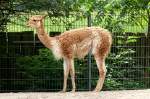
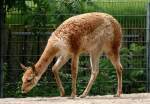
Vicuña on 29.06.2008 in Wilhelma/Stuttgart - The vicuñas are wild camels and live in the high Andes.
Manfred Möldner

Vicuña on 29.06.2008 in Wilhelma/Stuttgart - The vicuñas are wild camels and live in the high Andes.
Manfred Möldner

Head of a Vicuña on 01.06.2008 in Wilhelma/Stuttgart - The vicuñas are wild camels and live in the high Andes.
Manfred Möldner

Galerien / Tierfotos / Nagetiere

528 799x502 Px, 29.06.2008

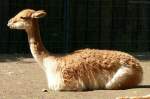
Vicuña on 01.06.2008 in Wilhelma/Stuttgart - The vicuñas are wild camels and live in the high Andes.
Manfred Möldner

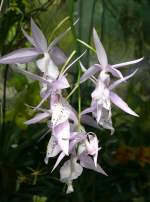
Orchid Phalaenopsis on 18.06.2008 in Wilhelma/Stuttgart - The genus Phalaenopsis belongs to the family of orchids (Orchidaceae) and is today one of the best-known and most popular genera of tropical orchids. The botanical name is derived from the Greek Phalaina (moth) and -opsis (appearance), as the flowers resemble tropical moths. - Source = WIKIPEDIA
Manfred Möldner

Orchid on 18.06.2008 in Wilhelma/Stuttgart
Manfred Möldner

Pfeiffenblume on 18.06.2008 in Wilhelma/Stuttgart
Manfred Möldner

Galerien / Pflanzen und Pilze / Bl�- und Kleinpflanzen

650  1 571x800 Px, 28.06.2008

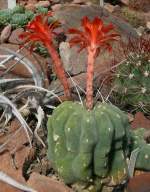
Cactus Matucana on 18.06.2008 in Wilhelma/Stuttgart - Matucana (Syn.: Eomatucana F.Ritter, Submatucana Backeberg) is a genus of cacti named after the village of Matucana in Peru on the western slope of the Andes Cordillera northeast of the capital Lima, where the first typical species was found. Source = WIKIPEDIA
Manfred Möldner

Bloom of the Matucana cactus on 18.06.2008 in Wilhelma/Stuttgart
Manfred Möldner

Bloom of the Christ's Thorn on 18.06.2008 in Wilhelma/Stuttgart
Manfred Möldner

Christ's Thorn on 18.06.2008 in Wilhelma/Stuttgart - Christ's Thorn (Euphorbia milii, Syn.: Euphorbia bojeri Hook., Euphorbia splendens Bojer ex Hook., Euphorbia splendens var. bojeri (Hook.) Leandri) is a species in the genus Spurge (Euphorbia) from the family Euphorbiaceae. Source = WIKIPEDIA
Manfred Möldner

Uncarina on 18.06.2008 in Wilhelma/Stuttgart - Uncarina is a genus of the sesame family (Pedaliaceae) (syn.: Sesamaceae), a family in the order of Lamiales. Uncarina occurs in 11 species in Madagascar - Source = WIKIPEDIA
Manfred Möldner

Kalanchoe on 18.06.2008 in Wilhelma/Stuttgart - Kalanchoe is a genus of plants from the family Crassulaceae (stonecrop family). It is divided into the two sections Kalanchoe and Bryophyllum. The succulent plants are distributed in the tropical regions of Africa and Asia. In many species of the section Bryophyllum, which is exclusively native to Madagascar, plantlets develop on the edges of the leaves as well as on the inflorescence. - Source = WIKIPEDIA
Manfred Möldner