

landschaftsfotos.eu Linie landschaftsfotos.eu
Hello guest, you are not logged in. Log in | Create account 
Forum   Contact   Legal notice
German English 
Die Galerie zeigt eine Auswahl an Fotografien verschiedener Nagetiere und Kleinsäuger aus unterschiedlichen Regionen und Lebensräumen. Zu sehen sind Eichhörnchen in städtischen Parks wie dem Central Park in New York City sowie in Beierfeld und Dortmund. Weitere Aufnahmen zeigen Feldhasen, Bisamratten und Nutrias an Gewässern wie der Breitsach, der Elster bei Auensee und im Botanischen Garten Rombergpark Dortmund. Spitzmäuse wurden am Bahndamm in Rheinbach dokumentiert. Im Kaisergarten Oberhausen sind ein Waschbär und Nutria festgehalten. In Wilhelma/Stuttgart wurden verschiedene Arten wie Kuba-Baumratte, Degu, Kurzohr-Rüsselspringer und Gundi fotografiert. Ein Motiv zeigt den Kopf eines Vikugna, wobei es sich um ein Wildkamel aus den Hochanden handelt. Die Galerie enthält zudem Aufnahmen von möglicherweise einer Haselmaus oder einem Streifenhörnchen sowie von Hasen in Burgkemnitz. Die Bilder dokumentieren sowohl typische als auch weniger bekannte Nagetiere und Kleinsäuger in verschiedenen natürlichen und zoologischen Umgebungen. EU label: AI-generated content
Rabbit alert! This little rabbit was chased by another and almost ran me over!
Martin Schneider

Galleries / Animal photos / Rodents

668 800x531 Px, 29.08.2009

He probably thought I wouldn't notice him... Photographed on 07.08.09 at Burgkemnitz station.
Martin Schneider

Galleries / Animal photos / Rodents

665 800x527 Px, 29.08.2009

Hazel dormouse/Chipmunk ?? The specialists are needed!! Scan from 35mm slide
Rolf Reinhardt

Galleries / Animal photos / Rodents

1557 800x520 Px, 14.01.2009

A small shrew made itself comfortable on the railway embankment in Rheinbach - did not let itself be disturbed - 12.11.2004
Rolf Reinhardt

Galleries / Animal photos / Rodents

684 800x545 Px, 14.09.2008

Small shrew on the railway embankment in Rheinbach, unflappable - 12.11.2004
Rolf Reinhardt

Galleries / Animal photos / Rodents

592 800x595 Px, 14.09.2008

A muskrat is making its  rounds  in the Breitsach; 080806
A muskrat is making its "rounds" in the Breitsach; 080806
JohannJ

Galleries / Animal photos / Rodents

543 800x600 Px, 08.08.2008

Near the Elster River close to the Auensee, nutria have found a well-stocked table, 28.06.08
Kai Gläßer

Galleries / Animal photos / Rodents

611 800x600 Px, 29.06.2008

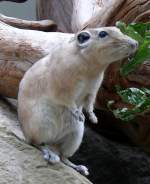
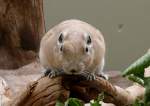
Gundi on 14.06.2008 in Wilhelma/Stuttgart - Gundi is a type of comb-fingered rodent. These rodents live only in the rocky mountains and dry steppes of northern Africa. They are about the size of a guinea pig (up to 20 centimeters long, tail about five centimeters) and appear rather stocky. Their fur is usually soft, their whiskers are particularly long, and their tail is also covered with long bristles. The comb-fingered rodents feed on grasses, herbs, and grains. They usually live in family groups but do not show territorial behavior. After sunrise, they come out of their rock crevices to feed, then they take a sunbath. They become active again only towards evening and retreat to the rock caves at sunset. Similar to marmots, they warn each other with whistles. They can enter a kind of apparent death-like immobility to avoid being detected by predators. Source = www.tier-lexikon.de
Manfred Möldner

Gundi on 14.06.2008 in Wilhelma/Stuttgart - Gundi is a type of comb-fingered rodent. These rodents live only in the rocky mountains and dry steppes of northern Africa. They are about the size of a guinea pig (up to 20 centimeters long, tail about five centimeters) and appear rather stocky. Their fur is usually soft, their whiskers are particularly long, and the tail is also covered with long bristles. The comb-fingered rodents feed on grasses, herbs, and grains. They usually live in family groups but do not show territorial behavior. After sunrise, they come out of their rock crevices to feed, then they take a sunbath. They become active again only towards evening and retreat to the rock caves at sunset. Similar to marmots, they warn each other with whistles. They can enter a kind of apparent death-like immobility to avoid being detected by predators. Source = www.tier-lexikon.de
Manfred Möldner

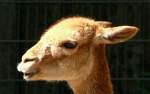
Head of a Vicuña on 01.06.2008 in Wilhelma/Stuttgart - The vicuñas are wild camels and live in the high Andes.
Manfred Möldner

Galleries / Animal photos / Rodents

537 799x502 Px, 29.06.2008

Gundi on 31.05.2008 in Wilhelma/Stuttgart
Manfred Möldner

Short-eared Elephant Shrew on 31.05.2008 in Wilhelma/Stuttgart
Manfred Möldner

Galleries / Animal photos / Rodents

1517 800x527 Px, 07.06.2008

Short-eared elephant shrew on 31.05.2008 in Wilhelma/Stuttgart
Manfred Möldner

Galleries / Animal photos / Rodents

978 800x548 Px, 07.06.2008

Degu on 31.05.2008 in Wilhelma/Stuttgart
Manfred Möldner

Galleries / Animal photos / Rodents

629 800x531 Px, 07.06.2008

Cuban Tree Rat on 31.05.2008 in Wilhelma/Stuttgart
Manfred Möldner

Galleries / Animal photos / Rodents

2794 800x531 Px, 07.06.2008

A squirrel in Central Park in New York City. Taken on 12/04/08.
Marcel W.

A squirrel in Central Park in New York City. Taken on 12/04/08.
Marcel W.

A squirrel in Central Park in New York City. Taken on 12.04.08
Marcel W.

Nutria (also known as swamp beaver or water rat) - Photographed in Kaisergarten Oberhausen
Marina Frintrop

Galleries / Animal photos / Rodents

1755 775x561 Px, 01.11.2007

A squirrel is gathering its winter supplies near the former train station in Beierfeld, 03.10.07
Kai Gläßer

Galleries / Animal photos / Rodents

973 800x628 Px, 05.10.2007

You can observe small ground squirrels all over Bryce Canyon. This one is currently enjoying its meal.  
The photo was taken on July 21, 2006.
You can observe small ground squirrels all over Bryce Canyon. This one is currently enjoying its meal. The photo was taken on July 21, 2006.
Ulrich Slovig

USA / Utah / Bryce Canyon, Galleries / Animal photos / Rodents

1304 640x480 Px, 27.06.2007

The Mick Jagger of raccoons - Photographed in Kaisergarten Oberhausen.
Marina Frintrop

Galleries / Animal photos / Rodents

911 690x800 Px, 22.06.2007

Shrew; 060623
Shrew; 060623
JohannJ

Galleries / Animal photos / Rodents

854 800x600 Px, 02.06.2007

Squirrel has found a little something, 050702
JohannJ

Galleries / Animal photos / Rodents

721 800x600 Px, 02.06.2007