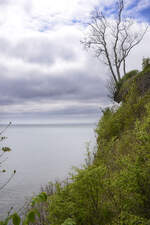
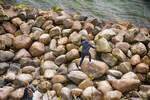
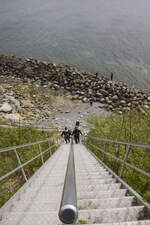
Auf Landschaftsfotos.eu hochgeladene Bilder im August 2021:
![]()
10. August 2021 (20 Photos)
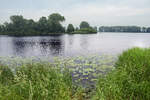
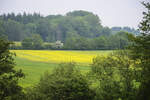
The Eider south of Süderstapel. From 811 to 1864, the river marked the southern border of Denmark with two brief interruptions. Photo taken: May 29, 2021.
Hans Christian Davidsen
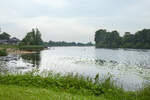
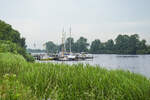
Near Süderstapel in the district of Schleswig-Flensburg, the Eider River makes a sharp bend. Photo taken on May 29, 2021.
Hans Christian Davidsen
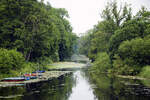
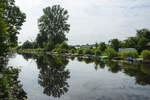
The Eider Canal (originally "Schleswig-Holstein Canal" also "Old Eider Canal") was a waterway built between 1778 and 1785, which connected the Kiel Fjord with the Lower Eider near Rendsburg. The canal itself was 34 kilometers long and, with its connection to the Eider, which flows into the North Sea near Tönning, enabled for the first time a short shipping route between the Baltic and the North Sea. Photo taken: June 29, 2021.
Hans Christian Davidsen
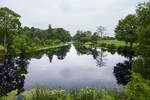
The Eider Canal, built over 200 years ago (also called the Schleswig-Holstein Canal), was the direct predecessor of the Kiel Canal and partially followed the same route. Photo taken: June 29, 2021.
Hans Christian Davidsen
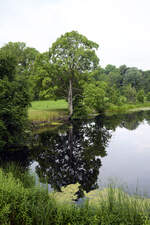
At the old Eider Canal near Kluvensiek in Schleswig-Holstein. From 1784 to 1890, the canal connected the Kiel Fjord at Kiel-Holtenau with the natural river course of the Lower Eider near Rendsburg. Together with the Eider, the canal formed a waterway for shipping between the North Sea and the Baltic Sea.
Photo taken: May 29, 2021.
Hans Christian Davidsen
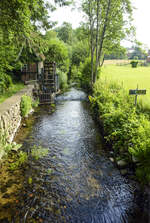
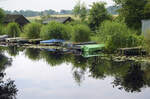
The Eider River at the village street in Brügge near Bordesholm in Schleswig-Holstein. Photo taken on June 29, 2021.
Hans Christian Davidsen
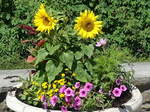
Hamburg-Winterhude on 16.6.2021: summer-planted ground container by the city park gardeners /
Harald Schmidt
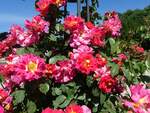
Hamburg-Winterhude on 16.6.2021: lushly blooming climbing roses in the rose garden of the city park /
Harald Schmidt
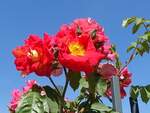
Hamburg-Winterhude on 16.6.2021: lushly blooming climbing roses in the rose garden of the city park /
Harald Schmidt
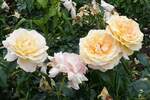
Hamburg-Winterhude on 25.6.2021: Blooming roses in the rose garden of the city park in the Winterhude district /
Harald Schmidt
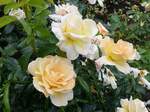
Hamburg-Winterhude on 25.6.2021: Blooming roses in the rose garden of the city park in the Winterhude district /
Harald Schmidt
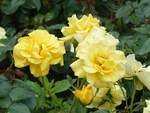
Hamburg-Winterhude on 25.6.2021: Blooming roses in the rose garden of the city park in the Winterhude district /
Harald Schmidt
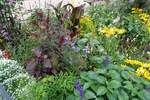
Hamburg-Winterhude on 12.7.2021: summer bedding planting in the city park /
Harald Schmidt
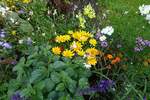
Hamburg-Winterhude on 12.7.2021: summer bedding planting in the city park /
Harald Schmidt
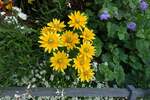
Hamburg-Winterhude on 12.7.2021: summer bedding planting in the city park /
Harald Schmidt
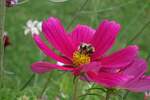
Hamburg on 22.7.2021: a busy "nectar collector" on a blossom /
Harald Schmidt
11. August 2021 (19 Photos)
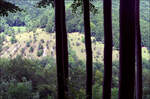
In the upper Filstal -
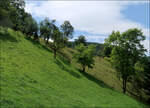
The nature reserve 'Sterneck' near Wiesensteig as seen from the opposite side of the valley.
10.08.2021 (M)
Gisela, Matthias und Jonas Frey
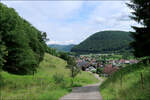
The upper Filstal -
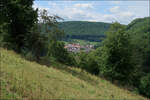
... with the village of Mühlhausen in the valley. In the background, below the forested mountain, the route of the A8 motorway can be seen along the noise barrier. Here, only the lanes heading uphill towards Ulm run. The opposite direction leads down into the valley on the other side of the mountain.
10.08.2021 (M)
Gisela, Matthias und Jonas Frey
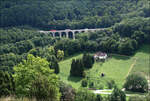
The upper Filstal -
... near Wiesensteig. View from the 'Sterneck' nature reserve across the valley to the Todsburg suspension bridge of the A8 motorway.
10.08.2021 (M)
Gisela, Matthias und Jonas Frey
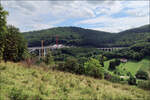
The upper Filstal -
... near Wiesensteig. The valley landscape is also shaped by infrastructure constructions. On the left, the Filstal railway bridge of the new Stuttgart - Ulm line, which went into operation in 2022; on the right, the Todsburg slope bridge of the A8 motorway. Construction of the motorway began in 1938, but due to the war, the ascent of the Swabian Alb was only completed in 1955/56.
Photo location: Nature reserve 'Sterneck.'
10.08.2021 (M)
Gisela, Matthias und Jonas Frey
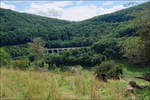
The upper Filstal -
near Wiesensteig. Another view from the nature reserve 'Sterneck' across the valley to Steinbühlberg with the Todsburg Bridge of the A8.
10.08.2021 (M)
Gisela, Matthias und Jonas Frey
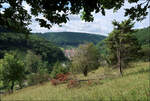
The upper Filstal -
View from the nature reserve 'Sterneck' to the small town of Wiesensteig located in the narrow valley.
10.08.2021 (M)
Gisela, Matthias und Jonas Frey
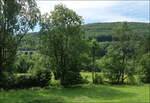
The upper Filstal -
In the valley between Mühlhausen and Wiesensteig. On the left, the Todsburg suspension bridge of the A8.
10.08.2021 (M)
Gisela, Matthias und Jonas Frey
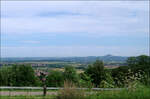
Wide view from the Albtrauf -
... over the Alb foothills towards Göppingen with the witness mountain 'Hohenstaufen' on the right in the distance. Shot from the bus on the Gammelshauser Steige.
21.08.2021 (M)
Gisela, Matthias und Jonas Frey
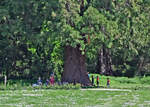
Size comparison - massive giant sequoia and "small" people. Erftstadt-Liblar, in the park of Schloss Gracht. 30.05.2021
Rolf Reinhardt
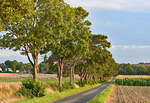
Row of trees along a country path near Euskirchen - 02.08.2021
Rolf Reinhardt
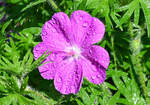
Geranium bloom with water droplets in the garden - 04.06.2021
Rolf Reinhardt
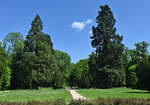
Giant sequoias in the park of Gracht Castle in Erftstadt-Liblar - 30.05.2021
Rolf Reinhardt
13. August 2021 (8 Photos)
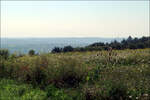
Above Esslingen on the Schurwaldhöhe, the view extends over the Neckar Valley to the Stuttgart TV tower and the telecommunications tower.
12.08.2021 (M)
Gisela, Matthias und Jonas Frey
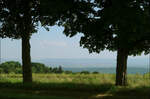
In the background, the blue wall -
... of the Swabian Jura. View from the Schurwaldhöhe near the Esslingen gliding airfield.
12.08.2021 (M)
Gisela, Matthias und Jonas Frey
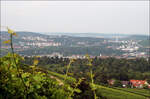
Urban landscape with some railway reference -
Here you look from Kappelberg above Fellbach towards the northern part of Stuttgart. In the center of the image, the built-up strip belongs to Stuttgart-Bad Cannstatt. Above it is the Rosensteinpark with the two new tunnel portals for the railway at the new Neckar bridge. Further up in the center of the image is the Killesberg. To the right of it is the Pragsattel high-rise.
12.08.2021 (M)
Gisela, Matthias und Jonas Frey
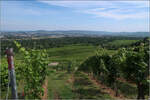
The Waiblingen Remstal Bay -
... seen from the Kappelberg. Waiblingen lies to the left, Kernen-Rommelshausen in the center of the image, with Weinstadt adjoining to the left.
12.08.2021 (M)
Gisela, Matthias und Jonas Frey
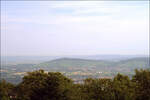
From the Kernenturm -
... on the 513 m high Kernen, you have a beautiful panoramic view. Here you look towards the Korber Kopf at the Waiblingen Remstal bay. In the background, the ridges of the Swabian Forest.
12.08.2021 (M)
Gisela, Matthias und Jonas Frey
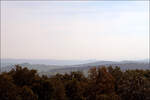
View from the Kernenturm -
... looking east towards the mountain ridge of the Schurwald leading to the Rems Valley. On the far left in the haze, the eastern part of the Swabian Jura is visible.
12.08.2021 (M)
Gisela, Matthias und Jonas Frey
14. August 2021 (3 Photos)
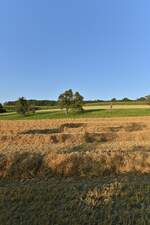
Now the grain has already been harvested again, the straw is being windrowed and pressed into round bales. Seen here on Saturday, August 14, 2021, in Reichenbuch.
Andreas Strobel
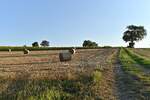
Straw bales lie in the field, stubble still protrudes a few centimeters above the ground.
You can slowly feel autumn approaching as the cool evening breeze sweeps over the fields.
Saturday, 14.8.2021
Andreas Strobel
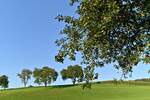
Traditional orchard trees in Reichenbuch. When you are traveling in the Odenwald, you repeatedly come across traditional orchards and fruit trees along field and path edges. This was also the case here on Saturday, August 14, 2021.
Andreas Strobel
15. August 2021 (18 Photos)
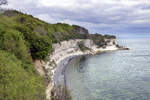
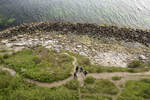
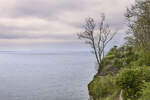
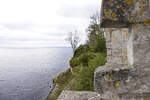
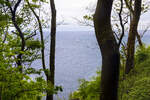
On South Zealand, the cliff Stevns Klint rises to a height of 41 meters above sea level and is clearly the main tourist attraction in this region. Stevns Klint was added to the UNESCO World Heritage list in 2014.
Photo taken: May 15, 2021.
Hans Christian Davidsen
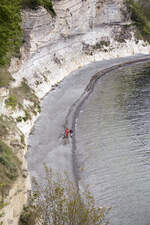
Stevns Klint on the island of Zealand is a chalk coast with formations from the Upper Cretaceous and the Danian, the lowest stage of the Tertiary. In 2014, UNESCO granted the cliff World Natural Heritage status. Photo taken: May 15, 2021.
Hans Christian Davidsen
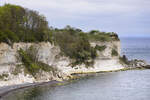
Stevns Klint is a cliff coastline in the southeast of the Danish Baltic Sea island Zealand. The cliff stretches about 15 kilometers and rises up to 41 meters above sea level. Photo taken: May 15, 2021.
Hans Christian Davidsen
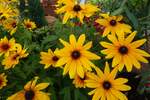
Hamburg on 12.7.2021: golden yellow flowering bush in a garden restaurant in the Billstedt district /
Harald Schmidt
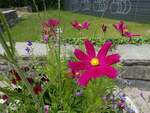
Hamburg-Winterhude on 25.6.2021: Close-up of a summer-planted flower box /
Harald Schmidt

Hamburg-Winterhude on 25.6.2021: Close-up of a summer-planted flower box /
Harald Schmidt

Hamburg-Winterhude on 25.6.2021: Close-up of a summer-planted flower box /
Harald Schmidt
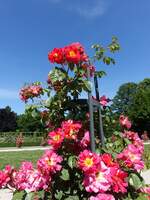
Hamburg-Winterhude on 16.6.2021: lushly blooming climbing roses in the rose garden of the city park /
Harald Schmidt
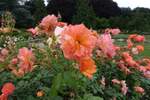
Hamburg on 25.6.2021: Blooming roses in the rose garden of the city park in the Winterhude district /
Harald Schmidt
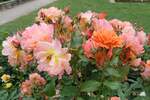
Hamburg on 25.6.2021: Blooming roses in the rose garden of the city park in the Winterhude district /
Harald Schmidt
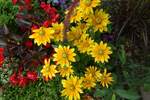
Hamburg-Winterhude on 22.7.2021: blooming in the city park /
Harald Schmidt
16. August 2021 (10 Photos)
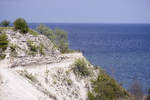
Baltic Sea view from the Holtug Chalk Quarry on the island of Zealand in Denmark. Shot: May 15, 2021.
Hans Christian Davidsen
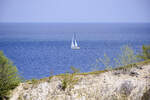
Lake view from the Holtug chalk quarry on the island of Zealand in Denmark. Photo taken: May 15, 2021.
Hans Christian Davidsen
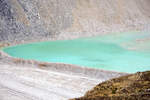
Chalk lake in the Stevns Klint quarry as seen from "Overblikket" (Island of Zealand - Denmark). Photo taken: May 15, 2021.
Hans Christian Davidsen
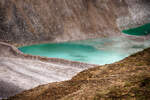
View of Stevns Chalk Quarry from the Hærvejen (Island of Zealand - Denmark). Photo taken: May 15, 2021.
Hans Christian Davidsen
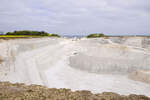
View of Stevns Klint chalk cliff on the island of Zealand in Denmark. Photo taken: May 15, 2021.
Hans Christian Davidsen
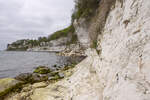
The cliff Stevns Klint on the island of Zealand (Denmark) is about 65 to 71 million years old.
The cliff consists of four layers: at the bottom is the soft chalk layer, above it a layer of fish clay, then hard limestone, and at the very top traces from the last Ice Age can be found.
Until the 20th century, bryozoan limestone from Stevns Klint was quarried and used as building material. This material is now known as sedimentary rock.
Photo taken: May 15, 2021.
Hans Christian Davidsen
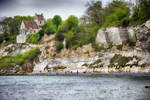
Stevns Klint is up to 40 meters high and stretches 17 kilometers along the coast of Zealand. The cliff is evidence of the dramatic asteroid impact that struck the Earth 66 million years ago. Photo taken: May 15, 2021.
Hans Christian Davidsen
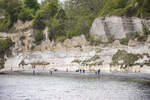
UNESCO World Heritage Stevns Klint on the island of Zealand. The dramatic cliffs at Stevns Klint are among the most important fossil sites in the world. Here you can discover 65 million years of Earth's history, exposed by the sea. Photo taken: May 15, 2021.
Hans Christian Davidsen
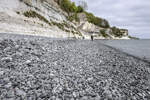
On the beach in front of Stevns Klint on the island of Zealand in Denmark. Shot: May 15, 2021.
Hans Christian Davidsen
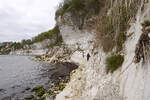
Stevns Klint near Højeruplund on the island of Zealand in Denmark. Photo taken on May 15, 2021.
Hans Christian Davidsen