
landschaftsfotos.eu Linie landschaftsfotos.eu
Hello guest, you are not logged in. Log in | Create account 
Forum   Contact   Legal notice
German English 

Photos by Ulrich Slovig
31 Photos
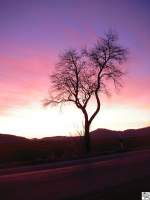
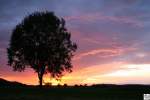
A day comes to an end. Atmospheric shot from the Steinach Valley near Mitwitz in Upper Franconia on June 23, 2009.
Ulrich Slovig

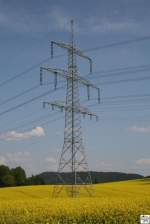
In a sea of yellow blooming rapeseed stands a high-voltage pylon. The photo was taken on May 3, 2009, near Haig in the Kronach district.
Ulrich Slovig

Deutschland / Bayern / Oberfranken

1032 533x800 Px, 03.05.2009

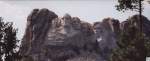
One of the greatest American landmarks is Mount Rushmore, located in the Black Hills of South Dakota. From 1927 to 1941, John Gutzon de la Mothe Borglum carved the four heads of the American presidents George Washington, Thomas Jefferson, Theodore Roosevelt, and Abraham Lincoln into the rock.
Ulrich Slovig

USA / South Dakota / Black Hills

2200 800x328 Px, 24.07.2008

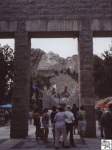
One of the greatest American landmarks is Mount Rushmore, located in the Black Hills of South Dakota. From 1927 to 1941, John Gutzon de la Mothe Borglum carved the four heads of American presidents George Washington, Thomas Jefferson, Theodore Roosevelt, and Abraham Lincoln into the rock.
Ulrich Slovig

USA / South Dakota / Black Hills

828 600x800 Px, 24.07.2008

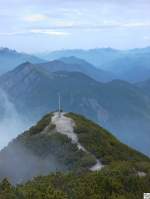
View of the summit cross on Herzogstand. The photo was taken on May 17, 2008. While clouds and fog obstructed the view on the left side, the view on the other side was relatively clear.
Ulrich Slovig

Sunset over the Steinach Valley (Kronach district) on February 17, 2008.
Ulrich Slovig

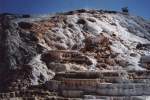
In northwestern Wyoming lies Yellowstone National Park. It is the oldest national park on Earth. It was placed under nature protection as early as 1872. With an area of 8,987 km², it is also one of the largest national parks. It received its name from the yellow rock found in the Grand Canyon of the Yellowstone. Since 1978, it has also been part of the UNESCO World Natural Heritage. The image shows the travertine terraces of Mammoth Hot Springs, which can be explored via wooden boardwalks. We did this on our USA trip on July 18, 2006.
Ulrich Slovig

USA / Wyoming / Yellowstone Nationalpark

994 800x534 Px, 26.08.2007

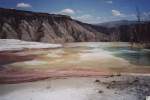
In northwestern Wyoming lies Yellowstone National Park. It is the oldest national park on Earth. It was designated as a protected area as early as 1872. With an area of 8,987 km², it is also one of the largest national parks. It got its name from the yellow rock found in the Grand Canyon of the Yellowstone. Since 1978, it has also been a UNESCO World Natural Heritage site. The photo shows the travertine terraces of Mammoth Hot Springs, where the water accumulated in the terraces glows in various colors. The photo was taken on July 18, 2006, during our visit to Yellowstone.
Ulrich Slovig

USA / Wyoming / Yellowstone Nationalpark

1021 800x534 Px, 26.08.2007

Im nordwestlichen Wyoming liegt der Yellowstone Nationalpark. Es handelt sich hierbei um den ältesten Nationalpark der Erde. Er wurde bereits im Jahr 1872 unter Naturschutz gestellt. Mit einer Fläche von 8987 m² gehört er auch zu den größten Nationalparks. Seinen Namen erhielt er durch das gelbe Gestein welches man im Grand Canyon des Yellowstone vorfinden kann. Seit den Jahre 1978 gehört er auch zum UNESCO Weltnaturerbe. In den Tälern des Yellowstone Parkes trifft man immer wieder auf Bisonherden, die in aller Ruhe auf den großen Wiesen weiden. Die Aufnahme entstand am 18. Juli 2006 bei unserer Rundreise durch die USA.
Ulrich Slovig

USA / Wyoming / Yellowstone Nationalpark

872 800x534 Px, 26.08.2007

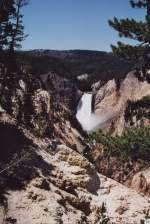
In northwestern Wyoming lies Yellowstone National Park. It is the oldest national park on Earth. It was designated as a protected area as early as 1872. With an area of 8,987 km², it is also one of the largest national parks. It got its name from the yellow rock found in the Grand Canyon of the Yellowstone. Since 1978, it has also been part of the UNESCO World Natural Heritage. The image shows a view over the eponymous Grand Canyon of the Yellowstone towards the Lower Falls. The photo was taken on July 18, 2006, during our tour through the USA.
Ulrich Slovig

USA / Wyoming / Yellowstone Nationalpark

989 533x800 Px, 26.08.2007

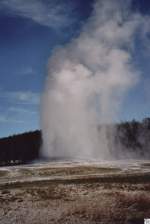
In northwestern Wyoming lies Yellowstone National Park. It is the oldest national park on Earth. It was placed under nature protection as early as 1872. With an area of 8,987 km², it is also one of the largest national parks. It received its name from the yellow rock found in the Grand Canyon of the Yellowstone. Since 1978, it has also been part of the UNESCO World Natural Heritage. The image shows one of the most famous spots in the national park, the Old Faithful Geyser. It is located in the Upper Geyser Basin, where we visited it on July 19, 2006, during our tour through the USA.
Ulrich Slovig

USA / Wyoming / Yellowstone Nationalpark

944 533x800 Px, 26.08.2007

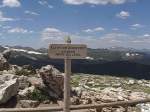
In the northwest of the US state of Colorado lies Rocky Mountain National Park. In 1859, Joel Estes and his son Milton first came to the area (to a large valley) 20 miles north of Lyons. A year later, they returned with their families to the region and began to establish a settlement. Around 1909, several conservationists advocated for this area to become a national park, which was realized in 1915 as the tenth national park of the USA. One main reason for this is that one-third of the park lies above the tree line (tundra). Just above the Alpine Visitor Center is this sign indicating an elevation of 12,005 feet (3,658 meters). During our stop at the Alpine Visitor Center on July 15, 2006, we made sure to take the short hiking trail to the summit. However, the highest point we reached that day was just past the Alpine Visitor Center, when we traveled by bus over 12,183 feet (3,718 meters).
Ulrich Slovig

USA / Colorado / Rocky Mountain National Park

1253 640x480 Px, 11.07.2007

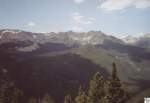
In the northwest of the US state of Colorado lies Rocky Mountain National Park. In 1859, Joel Estes and his son Milton first came to the area (to a large valley) 20 miles north of Lyons. A year later, they returned with their families to the region and began to establish a settlement. Around 1909, several environmentalists advocated making this area a national park, which was realized in 1915 as the tenth national park of the USA. One main reason for this is that one-third of the park lies above the tree line (tundra). The image shows a view of the mountains of the national park. It was taken on July 15, 2006.
Ulrich Slovig

USA / Colorado / Rocky Mountain National Park

966 800x553 Px, 11.07.2007

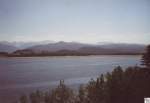
View over Lake Granby in northwest Colorado towards Rocky Mountain National Park.  
The shot was taken on July 15, 2006.
View over Lake Granby in northwest Colorado towards Rocky Mountain National Park. The shot was taken on July 15, 2006.
Ulrich Slovig

USA / Colorado / Rocky Mountain National Park

969 800x553 Px, 11.07.2007

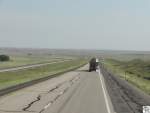
Ein Bild das die endlosen Weiten des Mittleren Westens der USA vermitteln soll. Es entstand aus den fahrenden Bus heraus nördlich von Cheyenne in Wyoming am 16. Juli 2006.
Ulrich Slovig

USA / Wyoming / Landschaften

856 800x606 Px, 30.06.2007

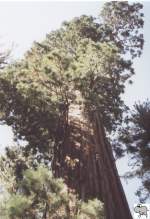
In the middle of California lie the two now merged national parks Sequoia and Kings Canyon. Here stand some of the largest and oldest living beings on our planet.  
The photo shows a view of the crown of the  General Grant Tree . It was taken on September 18, 2002.
In the middle of California lie the two now merged national parks Sequoia and Kings Canyon. Here stand some of the largest and oldest living beings on our planet. The photo shows a view of the crown of the "General Grant Tree". It was taken on September 18, 2002.
Ulrich Slovig

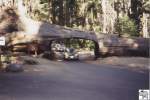
In the middle of California lie the two now merged national parks Sequoia and Kings Canyon. Here stand some of the largest and oldest living beings on our planet.  
A tunnel for cars was carved into a fallen giant sequoia tree (Sequoiadendron giganteum). The  Tunnel Log  can be found in Sequoia National Park. We drove through it on September 18, 2002, with our rental car, which can also be seen in the photo.
In the middle of California lie the two now merged national parks Sequoia and Kings Canyon. Here stand some of the largest and oldest living beings on our planet. A tunnel for cars was carved into a fallen giant sequoia tree (Sequoiadendron giganteum). The "Tunnel Log" can be found in Sequoia National Park. We drove through it on September 18, 2002, with our rental car, which can also be seen in the photo.
Ulrich Slovig

In the middle of California lie the two now merged national parks Sequoia and Kings Canyon. Here stand some of the largest and oldest living beings on our planet.  
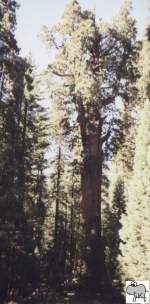
The  General Sherman Tree  in Sequoia National Park is the tallest giant sequoia (Sequoiadendron giganteum), measuring nearly 84 meters.  
The photo was taken on September 18, 2002.
In the middle of California lie the two now merged national parks Sequoia and Kings Canyon. Here stand some of the largest and oldest living beings on our planet. The "General Sherman Tree" in Sequoia National Park is the tallest giant sequoia (Sequoiadendron giganteum), measuring nearly 84 meters. The photo was taken on September 18, 2002.
Ulrich Slovig

In the middle of California lie the two now merged national parks Sequoia and Kings Canyon. Here stand some of the largest and oldest living beings on our planet.  
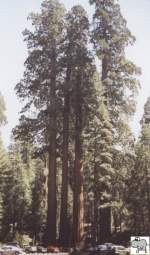
The image clearly shows the size comparison between regular cars and the giant sequoias (Sequoiadendron giganteum). The photo was taken on September 18, 2002.
In the middle of California lie the two now merged national parks Sequoia and Kings Canyon. Here stand some of the largest and oldest living beings on our planet. The image clearly shows the size comparison between regular cars and the giant sequoias (Sequoiadendron giganteum). The photo was taken on September 18, 2002.
Ulrich Slovig

In the middle of California lie the two now merged national parks Sequoia and Kings Canyon. Here stand some of the largest and oldest living beings on our planet.  
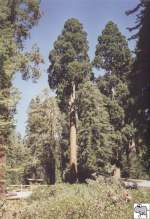
In Kings Canyon National Park stands the  General Grant Tree.  With its just over 80 meters, it is the second tallest tree in Sequoia & Kings Canyon National Park. The photo was taken on September 18, 2002.
In the middle of California lie the two now merged national parks Sequoia and Kings Canyon. Here stand some of the largest and oldest living beings on our planet. In Kings Canyon National Park stands the "General Grant Tree." With its just over 80 meters, it is the second tallest tree in Sequoia & Kings Canyon National Park. The photo was taken on September 18, 2002.
Ulrich Slovig

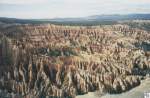
In the south of the US state of Utah lies one of the most impressive canyons on this earth: the Bryce Canyon. Named after the settler Ebenezer Bryce, who came to the Paria Valley in 1875 to engage in the timber industry. His neighbors called the canyon behind his house Bryce's Canyon. Thousands of sandstone formations shaped by erosion, called hoodoos, seem to grow out of the earth and create a breathtaking view of this legendary canyon. On September 10, 2002, during our USA tour from and to San Francisco in California, we visited Bryce Canyon in southern Utah. The picture shows the  Bryce Amphitheater  photographed from Bryce Point.
In the south of the US state of Utah lies one of the most impressive canyons on this earth: the Bryce Canyon. Named after the settler Ebenezer Bryce, who came to the Paria Valley in 1875 to engage in the timber industry. His neighbors called the canyon behind his house Bryce's Canyon. Thousands of sandstone formations shaped by erosion, called hoodoos, seem to grow out of the earth and create a breathtaking view of this legendary canyon. On September 10, 2002, during our USA tour from and to San Francisco in California, we visited Bryce Canyon in southern Utah. The picture shows the "Bryce Amphitheater" photographed from Bryce Point.
Ulrich Slovig

USA / Utah / Bryce Canyon

1237  2 800x527 Px, 27.06.2007

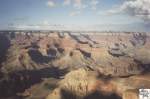
View over the Grand Canyon.  
The photo was taken on our road trip through the western USA on September 11, 2002.
View over the Grand Canyon. The photo was taken on our road trip through the western USA on September 11, 2002.
Ulrich Slovig

USA / Arizona / Grand Canyon

1197 800x531 Px, 27.06.2007

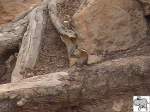
You can observe small ground squirrels all over Bryce Canyon. This one is currently enjoying its meal.  
The photo was taken on July 21, 2006.
You can observe small ground squirrels all over Bryce Canyon. This one is currently enjoying its meal. The photo was taken on July 21, 2006.
Ulrich Slovig

USA / Utah / Bryce Canyon, Galerien / Tierfotos / Nagetiere

1293 640x480 Px, 27.06.2007

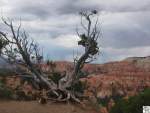
In the southern part of the US state of Utah lies one of the most impressive canyons on Earth: the Bryce Canyon. Named after the settler Ebenezer Bryce, who came to the Paria Valley in 1875 to engage in the timber industry. His neighbors called the canyon behind his house Bryce's Canyon. Thousands of sandstone formations shaped by erosion, called hoodoos, seem to grow out of the ground and create a breathtaking view of this legendary canyon. On July 21, 2006, during our USA trip from Denver, Colorado to Los Angeles, California, we visited Bryce Canyon. Shortly before, a rain shower passed over the canyon, causing the colors of the sandstone to shine in a beautiful, vibrant red-orange. The photo was taken during a short walk along the Rim Trail between Inspiration Point and Sunset Point.
Ulrich Slovig

USA / Utah / Bryce Canyon

1047 800x606 Px, 27.06.2007