
landschaftsfotos.eu Linie landschaftsfotos.eu
Hello guest, you are not logged in. Log in | Create account 
Forum   Contact   Legal notice
German English 
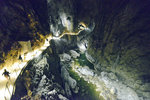
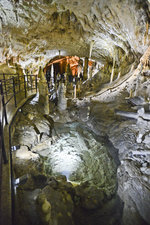
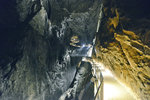
The Škocjan Caves in Slovenia are considered the most significant underground feature in the Kras karst landscape and among the most important caves in the world. The Reka River disappears beneath a rock face, above which lies the village of Škocjan, after which the caves (Škocjanske jame) are named. Photo taken: July 28, 2016.
Hans Christian Davidsen

Slowenien / Divaca / Skocjan

666 1200x800 Px, 08.09.2016

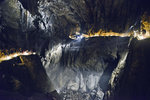
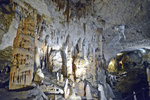
The Škocjan Caves in Slovenia - Archaeological research has proven that the caves and their surroundings have been inhabited since prehistoric times – from the Mesolithic, Neolithic, Bronze and Iron Ages through Antiquity and the Middle Ages – thus for over 5000 years. Photo taken: July 28, 2016.
Hans Christian Davidsen

Slowenien / Divaca / Skocjan

548 1200x800 Px, 08.09.2016

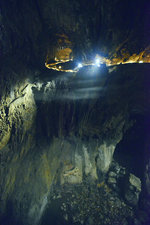
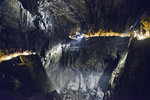
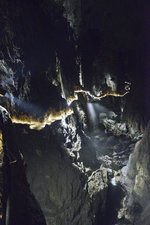
The Škocjan Caves in Slovenia - The Škocjan Caves represent a unique natural phenomenon created by the Reka River. The Reka originates at the foot of Snežnik and flows about 55 km above ground. When it reaches the Karst region Kras, an area composed of limestone, it deepens its riverbed not only mechanically through erosion but also through corrosion by dissolving the limestone. Photo taken: July 28, 2016.
Hans Christian Davidsen

Slowenien / Divaca / Skocjan

667 800x1200 Px, 08.09.2016

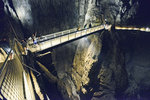
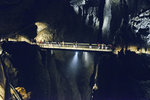
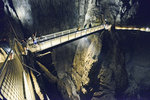
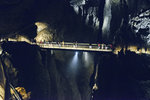
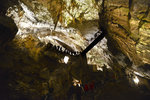
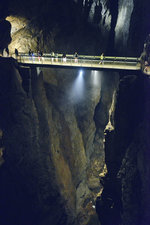
The Škocjan Caves in Slovenia - The Reka River flows through the canyon, turning northwest just before the Cerkvenik Bridge and continuing its course in the Hankek Channel. This is a 3.5 km long, 10–60 m wide, and over 140 m deep underground channel that was already explored at the end of the 19th century. Photo taken: July 28, 2016.
Hans Christian Davidsen

Slowenien / Divaca / Skocjan

958 1200x800 Px, 08.09.2016

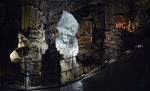
The Škocjan Caves - Due to their spacious chambers and the underground river gorge, the Škocjan Caves hold a very special place among the more than 8000 caves and grottos in Slovenia. Photo taken: July 28, 2016.
Hans Christian Davidsen

Slowenien / Divaca / Skocjan

630 1200x800 Px, 08.09.2016

The Škocjan Caves were formed by the sinking river Reka in the limestone. In 1987, they were inscribed as a UNESCO World Natural Heritage site. The Škocjan Caves are considered the most beautiful underground caves in the Slovenian Karst. Photo taken: July 28, 2016.
Hans Christian Davidsen

Slowenien / Divaca / Skocjan

601 1200x800 Px, 08.09.2016

In the Škocjan Caves (Slovene: Škocjanske jame). Photo taken: July 28, 2016.
Hans Christian Davidsen

Slowenien / Divaca / Skocjan

857 1200x800 Px, 08.09.2016

The Škocjan Caves (Slovene: Škocjanske jame). The Škocjan Caves are located in the Inner Carniola Karst region at an elevation of about 420 to 450 m. Rainwater and rivers dissolve the limestone rock. This creates caves and sinkholes – large funnels in the landscape. Photo taken: July 28, 2016.
Hans Christian Davidsen

Slowenien / Divaca / Skocjan

939 1200x800 Px, 08.09.2016

The Škocjan Caves - The largest chamber is the Martel Chamber, measuring 308 m in length, up to 146 m in height, and a maximum width of 123 m. It has a volume of 2.1 million m³. Photo taken: July 28, 2016.
Hans Christian Davidsen

Slowenien / Divaca / Skocjan

714 1200x800 Px, 08.09.2016

The Postojna cave system consists of three main levels – on the lowest one, the Pivka River still flows today. Connected to the Postojna Cave through the underground course of the Pivka are Pivka Jama, Otoska Jama, Magdalena Jama, Črna Jama, and Planinska Jama. Photo taken: July 27, 2016.
Hans Christian Davidsen

Slowenien / Primorsko-notranjska / Postojna

616 800x1200 Px, 05.09.2016

The Postojna Caves, Slovenian Postojnska jama (Italian Grotte di Postumia, German also Adelsberger Grotte), actually the entire Postojna Cave System (Postojnski jamski sistem), are located near the Slovenian town of Postojna. Dating of the sediments deposited in the cave system revealed an age of up to 0.9 million years<br>Photo taken: July 27, 2016.
The Postojna Caves, Slovenian Postojnska jama (Italian Grotte di Postumia, German also Adelsberger Grotte), actually the entire Postojna Cave System (Postojnski jamski sistem), are located near the Slovenian town of Postojna. Dating of the sediments deposited in the cave system revealed an age of up to 0.9 million years
Photo taken: July 27, 2016.

Hans Christian Davidsen

Slowenien / Primorsko-notranjska / Postojna

622 1200x800 Px, 05.09.2016

In the karst region of Postojna in Slovenia are the second largest show caves in the world accessible to tourists. The cave system of Postojna is the upper part of the karst-influenced catchment area of the Ljubljanica and has been formed by the Pivka, the main outflow of the Pivka basin, and its underground tributaries. Photo taken: July 27, 2016.
Hans Christian Davidsen

Slowenien / Primorsko-notranjska / Postojna

490 1200x733 Px, 05.09.2016

A complex of passages, galleries, and halls, a variety of karst phenomena, and easy access are the main reasons for the exceptional popularity and visitor numbers of the Postojna Cave, which has recorded 36 million visits in 200 years. Photo taken: July 27, 2016.
Hans Christian Davidsen

Slowenien / Primorsko-notranjska / Postojna

454 1200x800 Px, 05.09.2016

The Škocjan Caves are a cave system near the Slovenian town of Škocjan. In 1986, they were inscribed by UNESCO on the World Cultural and Natural Heritage list. Photo taken: August 28, 2016.
Hans Christian Davidsen

Slowenien / Divaca / Skocjan

819 800x1200 Px, 05.09.2016

The Škocjan Caves are located in the Inner Carniola Karst region at an elevation of approximately 420 to 450 m. Rainwater and rivers dissolve the limestone. The largest chamber is the Martel Chamber, measuring 308 m in length, up to 146 m in height, and a maximum width of 123 m. It has a volume of 2.1 million m³. Photo taken: July 28, 2016.
Hans Christian Davidsen

Slowenien / Divaca / Skocjan

502 800x1200 Px, 05.09.2016

The Škocjan Caves represent a unique natural phenomenon created by the Reka River. The Reka originates at the foot of Snežnik and flows approximately 55 km above ground. When it reaches the Karst landscape of Kras, an area composed of limestone, it deepens its riverbed not only mechanically through erosion but also through corrosion by dissolving the limestone. The visitor path constructed for tourists leads through a part of the caves. Photo taken: July 28, 2016.
Hans Christian Davidsen

Slowenien / Divaca / Skocjan

549 1200x800 Px, 05.09.2016

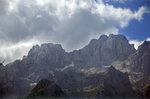
Lipnica (2417 meters) in the Slovenian Triglav National Park as seen from the main road 201. Photo taken on August 4, 2016.
Hans Christian Davidsen

Slowenien / Julischen Alpen / Gorenjska (Oberkrain)

444 1200x797 Px, 05.09.2016

The Triglav massif in Slovenia as seen from Jasna. Photo taken on August 4, 2016.
Hans Christian Davidsen

Slowenien / Julischen Alpen / Gorenjska (Oberkrain)

440 1200x797 Px, 03.09.2016

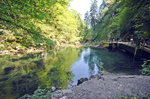
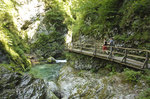
The Vintgar Gorge (Slovene: Blejski Vintgar) 4 kilometers northwest of Bled in Slovenia.
Hans Christian Davidsen

Slowenien / Julischen Alpen / Gorenjska (Oberkrain)

481 1200x797 Px, 03.09.2016

The Vintgar Gorge (Slovene: Blejski Vintgar) is located 4 kilometers northwest of Bled in Slovenia.
Hans Christian Davidsen

Slowenien / Julischen Alpen / Gorenjska (Oberkrain)

469 1200x797 Px, 03.09.2016

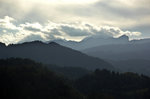
Clouds over the mountains near Bled in Slovenia. Photo taken on August 2, 2016.
Hans Christian Davidsen

Slowenien / Julischen Alpen / Gorenjska (Oberkrain)

377 1200x797 Px, 03.09.2016

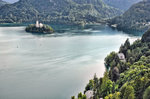
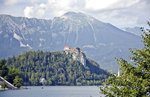
Lake Bled (Slovene: Blejsko jezero) as seen from the castle. Photo taken on August 1, 2016.
Hans Christian Davidsen

Slowenien / Julischen Alpen / Gorenjska (Oberkrain)

615 1200x799 Px, 03.09.2016

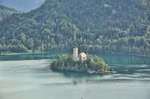
Lake Bled (Slovene: Blejsko jezero) near Bled. Photo taken on August 1, 2016.
Hans Christian Davidsen

Slowenien / Julischen Alpen / Gorenjska (Oberkrain)

408 1200x797 Px, 03.09.2016

The mountains of Lake Bled (Slovene: Blejsko jezero) in Slovenia. Photo taken on August 1, 2016.
Hans Christian Davidsen

Slowenien / Julischen Alpen / Gorenjska (Oberkrain)

420 1200x780 Px, 03.09.2016